
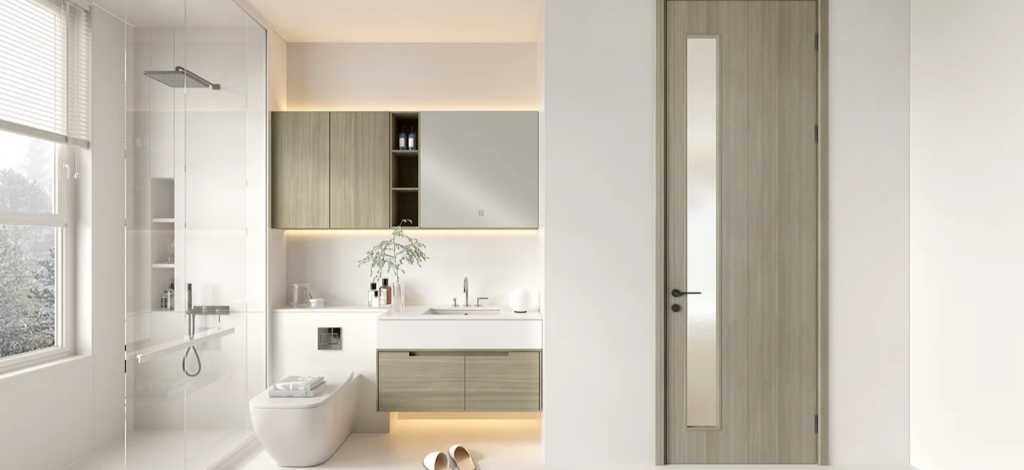
Choosing the right door material is a critical decision for homeowners, contractors, and project developers. For decades, solid wood has been the traditional standard for its natural beauty. However, Wood Plastic Composite (WPC) doors have emerged as a formidable, modern alternative. This guide provides a detailed, head-to-head comparison of WPC Door vs Wood Door, analyzing their core differences across performance, cost, and application to help you make an informed choice for your next project.
Head-to-Head Comparison: WPC vs Wood
Let’s break down the differences across the most important factors for doors.
1. Composition & Core Structure
WPC Door: An engineered material made from a blend of wood fibers/floor and thermoplastics (like PE or PVC). This creates a homogeneous, dense core that is impervious to moisture and lacks organic nutrients for pests.
Wood Door: Made from natural timber (solid or engineered). It is an organic, porous material that reacts to environmental changes in humidity and temperature.
2. Durability & Performance in Key Areas
This is where WPC doors fundamentally differentiate themselves, especially in demanding environments.
| Performance Factor | WPC Door | Wood Door |
| Moisture & Water Resistance | Excellent. Waterproof core with near-zero absorption (<1%). Will not swell, warp, or rot in high humidity (bathrooms, basements, coastal areas). | Poor. Highly susceptible. Absorbs moisture, leading to swelling, warping, and rot in damp environments. Requires perfect sealing. |
| Pest & Mold Resistance | Excellent. Inedible to termites and carpenter ants. Resists fungal and mold growth due to non-porous structure. | Vulnerable. A food source for termites. Prone to mold and mildew in damp conditions without chemical treatment. |
| Dimensional Stability | Excellent. Minimal expansion/contraction with temperature and humidity changes. Maintains consistent fit and operation. | Variable. Expands with high humidity and contracts in dry heat. Can lead to sticking, jamming, or gaps over time. |
| Fire Resistance | Good to Excellent. Can be manufactured with fire-retardant additives to meet commercial Class B/C ratings. | Variable. Natural wood is combustible. Fire resistance depends on thickness and specific treatments applied. |
3. Maintenance & Long-Term Costs
WPC Door: Extremely low maintenance. Requires only occasional cleaning with soap and water. No need for sanding, repainting, or varnishing to maintain integrity. The color is consistent throughout or capped with a durable, fade-resistant layer.
Wood Door: High maintenance. Requires regular refinishing (sanding, staining, or painting) every few years to protect against moisture, UV damage, and wear. Neglect leads to rapid deterioration.
4. Aesthetics & Customization
WPC Door: Offers highly realistic wood grain finishes through advanced foiling and lamination techniques. Available in a wide variety of colors and patterns (including stone and abstract). Consistency in appearance is guaranteed.
Wood Door: Provides the authentic, natural beauty and unique grain patterns of real wood, which is unmatched for traditional or high-end classic designs. However, grain and color can vary significantly between batches.
5. Environmental Impact
WPC Door: Considered eco-friendly as it often uses recycled wood and plastic materials. Long lifespan and zero/low VOC finishes contribute to green building points (e.g., LEED). Fully recyclable at end-of-life.
Wood Door: A renewable resource if sourced from sustainably managed forests (FSC-certified). Biodegradable. However, the environmental cost includes processing, finishing chemicals, and shorter lifespan in harsh conditions.
When Should You Choose a WPC Door?
WPC doors are the superior choice in scenarios where performance, low upkeep, and longevity are paramount:
High-Moisture Areas: Bathrooms, kitchens, laundry rooms, basements, and exterior applications in rainy or humid climates (common in South America, Southeast Asia, coastal regions).
Commercial & High-Traffic Projects: Hotels, hospitals, offices, and rental properties where durability, hygiene, and low maintenance costs are critical for operations and ROI.
Termite-Prone Regions: Areas with active termite populations where protecting the building envelope is a priority.
Modern, Consistent Aesthetics: Projects requiring a uniform look across many doors with minimal color variation.
When Might a Wood Door Still Be Preferable?
Solid wood doors retain their appeal in specific, controlled applications:
Heritage or Traditional Restoration: Projects where preserving historical authenticity and using natural materials is a strict requirement.
Dry, Interior Environments: In low-humidity climates and for interior rooms where atmospheric conditions are stable and controlled.
Luxury, Craftsmanship Focus: Bespoke, high-budget projects where the unique character, feel, and premium status of select, solid hardwoods are the primary design drivers.
The Bottom Line: It's About Total Cost of Ownership
The initial purchase price of a WPC door is often competitive with or slightly higher than a quality engineered wood door. However, the decision should be based on Total Cost of Ownership (TCO).
A WPC door represents a higher upfront investment for dramatically lower lifetime costs (near-zero maintenance, no replacement due to rot). A wood door often carries a lower initial cost but accrues significant lifetime costs through ongoing maintenance and potential premature replacement in unsuitable environments.
For the vast majority of modern residential and commercial applications—especially in challenging climates—WPC doors provide a more reliable, cost-effective, and worry-free solution.
Still unsure which door is right for your specific project?
Contact our technical team today for a free, personalized analysis. We can help you evaluate your environment, budget, and design goals to make the perfect choice. Get Your Free Consultation